 Yarsanmedia Yarsan Democratic Organization Official Website
یارسانمدیا
سروه کاظمی
۳۱.۱.۲۰۲۶
For decades, Yarsanis have faced systematic persecution in Iran and across all parts of Kurdistan. Because of our faith, we are denied legal recognition, basic rights, and protection. Today, this persecution has turned deadly.
In Iran, Yarsanis are targeted by the state through arrests, torture, killings during protests, and executions following unfair trials.
But the pressure does not come only from the regime.
Across Kurdistan, in all regions where Yarsanis live, many also face discrimination, silence, and exclusion from the societies around them, including from Kurdish communities they share daily life with. Yarsanis are often treated as invisible, their faith questioned, their suffering minimized, and their deaths ignored.
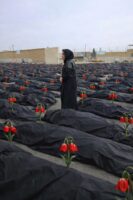
During protests in Iran, Yarsani women and men have been directly targeted and killed by security forces, especially in western Iran.
Human rights organizations have confirmed the deaths of multiple Yarsani protesters, both women and men, shot with live ammunition.
Among the known names are Malika Devasib, a Yarsani woman whose life was taken during the repression, and Keivan Rezaei and Ardashir Zarei, killed during protests. Others, including Yasin Mirzaei, Behrouz Safaei, Saman Nazari, and Sayyad Faramarzi, were also shot dead by Iranian forces.
These names represent only a fraction of the victims. Many Yarsani women and men remain unnamed due to fear, censorship, and threats against their families, not because they did not exist, but because speaking their names is dangerous.
Beyond the streets, Yarsanis have also been executed in Iranian prisons.
One of the most well known cases is Reza Rasayi, a Yarsani protester who was arrested for participating in protests and later secretly executed after an unfair trial.
Another Yarsani man, Behrouz Safari Ghaleh Zanjiri, was also executed under Iran’s judicial system.
According to human rights reports, at least eight Yarsanis have been confirmed killed during recent protest movements, though the real number is believed to be much higher.
What makes this tragedy even heavier is the silence.
Yarsanis are ignored by the Iranian state, overlooked by political movements, and too often erased in Kurdistan itself, as if Yarsani women and men do not exist, as if our dead do not matter.
But we exist.
We have names.
We have a history.
And we have the right to live freely, in Iran and across Kurdistan, without being killed or erased for our faith.
Justice must include Yarsani women and men everywhere they live.
Anything less is selective justice.
بازدیدها: 533